New Research Reveals 22 Million Self-Driving Vehicles on the Road by 2025
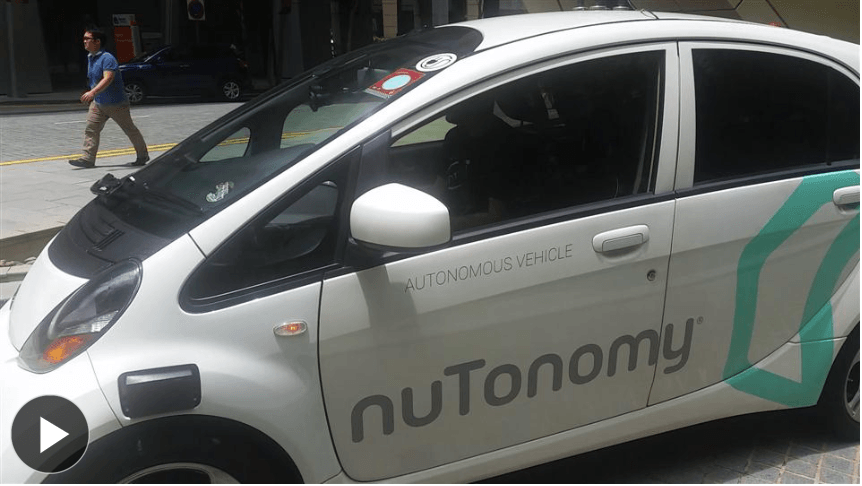
Ride Sharing companies Uber, Didi Chuxing, & Lyft, OEMs and Tech Giants Google & Baidu are betting on autonomous vehicle technology to drive future growth.
The introduction of driverless cars will result in fundamental changes to the automotive world and society in general_; and it is clear that the boundaries between private vehicle ownership, car sharing and rental fleets will increasingly become blurred__._ New findings from Juniper Research reveal that the annual production of self-driving cars will reach 14.5 million in 2025, up significantly from only a few thousands in 2020, to give a global installed base of more than 22 million consumer vehicles by 2025. The research, Autonomous Vehicles & ADAS: Adoption, Regulation & Business Models 2016-2025, found that the market adoption of AV (Autonomous Vehicle) technology is set to accelerate over the next few years, driven by:
- Increasingly stringent vehicle safety specifications;
- Environmental pressures;
- Rapid technological developments.
Download on-track-with-self-driving-vehicles-2-0-whitepaper 
End of the Road for Taxi Drivers?
The research found that driverless vehicles will have a disruptive impact on transportation around the world and will ultimately lead to millions of professional drivers being made redundant. Juniper predicts that city-based taxi services will be one of the key early adopters of driverless vehicles. Research author Gareth Owen added: “The introduction of driverless cars will result in fundamental changes to the automotive world and society in general; and it is clear that the boundaries between private vehicle ownership, car sharing and rental fleets will increasingly become blurred_.__”_ However, the research warned that following the first-ever fatality in an AV vehicle, the recent Tesla S accident in Florida, the AV industry must convince the public that their vehicles are completely safe. OEMs Accelerating AV Development Juniper found that a number of major OEMs including BMW, Toyota and GM are accelerating their AV development and testing programmes and now have firm plans to launch production vehicles. As a result, Juniper forecasts that driverless vehicles will start to become widespread in the 2020-2025 timeframe, although they will initially be confined to city centres or key routes due to the need for extensive V2X (Vehicle-To-Everything) infrastructure. A complimentary whitepaper, _‘_On Track with Self-Driving Vehicles 2.0’, is available to download from the Juniper website together with further details of the full research. Juniper Research provides research and analytical services to the global hi-tech communications sector, providing consultancy, analyst reports and industry commentary. SOURCE Juniper Research
Find out more about Autonomous Vehicles Asia Conference 2017
